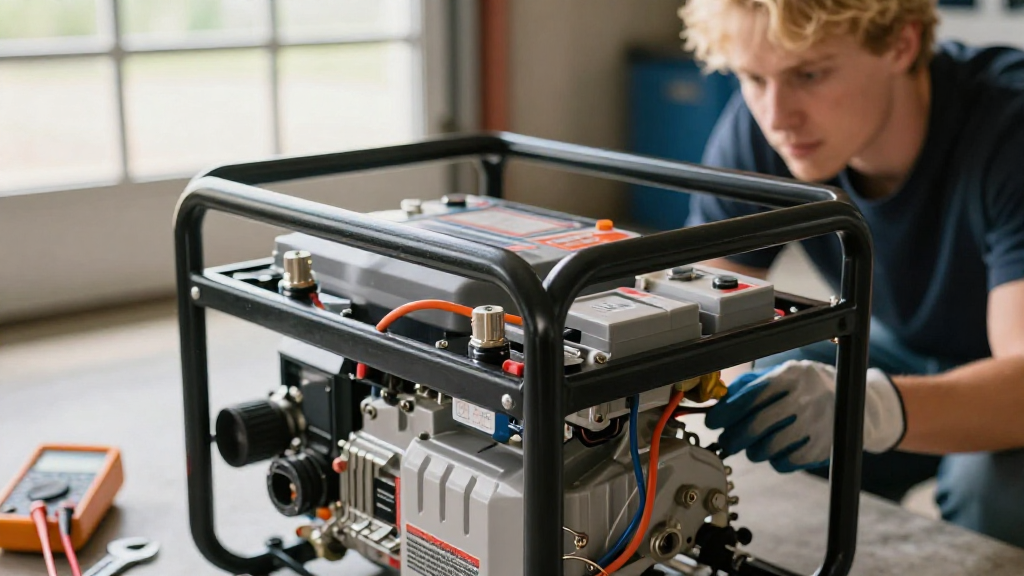
If you own a generator, understanding the generator battery maintenance guide is crucial for ensuring reliability and longevity in power supply.
Why Is Generator Battery Maintenance Important?
The generator battery is the heart of your power system.
Without proper maintenance, the battery can degrade and fail to start the generator when needed.
Here are several reasons why maintaining your generator battery is essential:
- Reliability: A well-maintained battery ensures your generator will start when emergencies strike.
- Longevity: Regular care can extend the lifespan of your battery, saving you money on replacements.
- Safety: Poorly maintained batteries can lead to leaks or explosions, posing a danger to you and your property.
Following a generator battery maintenance guide minimizes risks and maximizes efficiency.
What Are the Key Components of Generator Battery Maintenance?
Understanding the essential aspects of generator battery maintenance can help you take proactive steps.
Here are the key components to focus on:
-
Routine Inspections
– Check the battery terminals for corrosion.
– Look for any signs of physical damage, such as cracks or bulges.
– Test the battery voltage using a multimeter; it should read between 12.4V and 12.7V for a fully charged battery. -
Cleaning the Battery
– Use a mixture of baking soda and water to clean corrosion from the terminals.
– Rinse with clear water and let it dry completely.
– Apply petroleum jelly to the terminals to help prevent future corrosion. -
Fluid Levels
– If you have a flooded lead-acid battery, check the electrolyte levels regularly.
– Ensure they are topped up with distilled water only. -
Tight Connections
– Make sure that cables are securely connected to the battery terminals.
– Loose connections can lead to poor performance and potential damage. -
Charging Practices
– Ensure your generator battery is fully charged before first use.
– Regularly charge the battery, especially if the generator is not used frequently.
How Often Should You Test Your Generator Battery?
Testing your generator battery is vital to ensure optimal performance.
A general rule of thumb is to test your battery every 3 to 6 months.
Here’s a more detailed schedule:
- Every Month: Check the voltage and inspect physical conditions.
- Every 3 Months: Perform a thorough cleaning of terminals and inspect for corrosion.
- Every 6 Months: Check fluid levels (if applicable) and test the overall function of the battery with a load tester.
This generator battery maintenance guide helps keep a close eye on your battery’s health.
What Are the Signs of a Failing Generator Battery?
Being aware of the symptoms of a failing battery can save you from stress during emergencies.
Here are a few tell-tale signs that your generator battery may need attention:
- Slow Cranking: If your generator struggles to start, the battery may lack charge.
- Warning Lights: Any dashboard warning lights related to battery issues shouldn’t be ignored.
- Swelling or Bulging: Physical deformation is a sign the battery is malfunctioning and should be checked immediately.
- Corrosion Build-up: Excessive corrosion around terminals can indicate deterioration.
If you notice any of these signs, consult the generator battery maintenance guide or a professional immediately.
How Can Temperature Affects Battery Performance?
The performance of your generator battery can be significantly affected by environmental conditions, especially temperature.
- High Heat: Extreme temperatures can cause battery fluid to evaporate, leading to overheating and reduced capacity.
- Cold Weather: Low temperatures can hinder a battery’s ability to deliver current, leading to slower cranking or complete failure.
To combat these issues:
- Keep your generator and battery in a shaded or temperature-controlled environment whenever possible.
- Use insulated covers during winter months to protect against freezing.
What Tools Are Essential for Battery Maintenance?
Equipping yourself with the right tools is essential for effective battery maintenance.
Here’s what you’ll need for optimal upkeep:
- Multimeter: For checking voltage levels.
- Wrenches: For tightening connections.
- Terminal Cleaners: To remove corrosion effectively.
- Baking Soda and Water Mix: For cleaning terminals.
- Distilled Water: For topping up electrolyte levels in lead-acid batteries.
Having these tools on hand can make your maintenance tasks simpler and more effective.
When Should You Replace Your Generator Battery?
Even with the best maintenance, batteries have a limited lifespan.
Typically, a lead-acid battery lasts between 3 to 5 years, while lithium-ion batteries can last a bit longer.
Here are some indicators it might be time to replace your battery:
- Old Age: If your battery is nearing the end of its expected lifespan, consider replacing it even if it seems to work adequately.
- Frequent Failures: If you find yourself frequently jump-starting the generator or replacing charge, the battery may be on its last legs.
- Physical Damage: Any cracks, bulges, or leaks warrant immediate replacement for safety reasons.
Consulting the generator battery maintenance guide can help you make these decisions confidently.
Conclusion: Why It’s Crucial to Follow the Generator Battery Maintenance Guide
In summary, careful attention to your generator battery is not just a recommendation; it’s essential for your peace of mind during power outages.
This generator battery maintenance guide provides a clear roadmap to maintaining your battery’s health, ensuring reliability when you need it most.
By routinely inspecting, cleaning, and properly charging your battery, you enhance its performance and longevity.
Always remember that when it comes to power backup, proactive maintenance is the key to reliability.
Ensure that your generator battery is well-cared for and free of issues, allowing you to face any power outage with confidence.