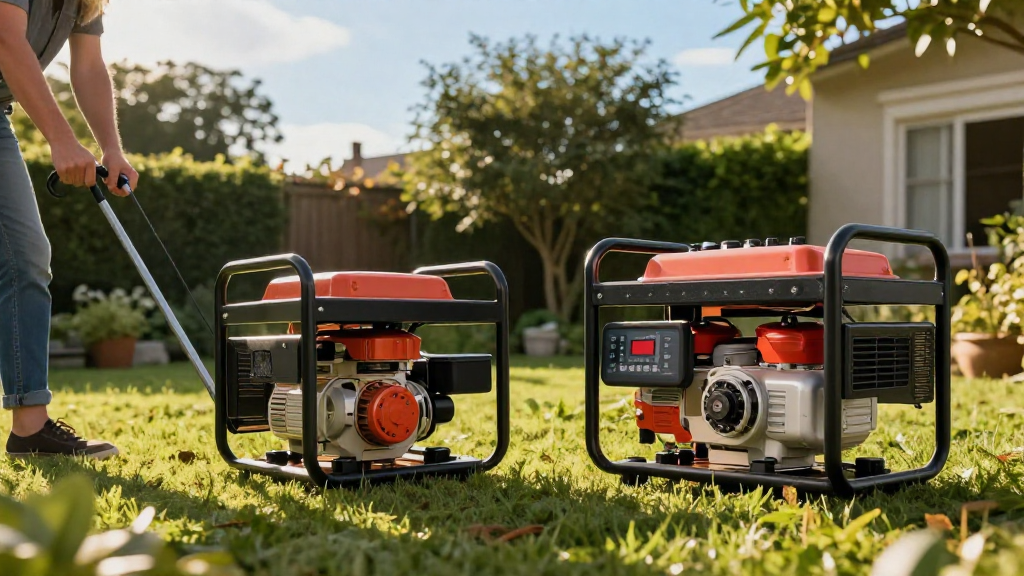
When it comes to power generation, understanding the differences between manual and automatic generator start systems can significantly impact your choice and overall efficiency.
This article will delve into these differences, helping you make an informed decision about which generator start option is best for your needs.
What is a Manual Generator Start?
A manual generator start requires human intervention to start the generator.
Technicians or operators must be present to activate the generator during a power outage or when backup power is needed.
Here are some key characteristics of manual generator start systems:
- User Initiated: The operator must physically go to the generator to start it.
- Monitoring Required: Users need to be attentive to outages to initiate the startup process.
- Less Costly: Generally, manual systems are less expensive to purchase and install compared to automatic systems.
Manual generator start systems are often used in smaller applications or situations where power outages are infrequent.
What is an Automatic Generator Start?
In contrast, an automatic generator start system is designed to kick in without any human intervention.
These systems possess an integrated controller that monitors the electrical supply and automatically activates the generator when a power loss is detected.
Key characteristics of automatic generator start systems include:
- Self-Activation: The generator activates itself during a power outage.
- Real-Time Monitoring: Integrated sensors detect power loss or fluctuations and engage the generator as needed.
- Higher Initial Cost: With additional technology and installation requirements, automatic systems often come with a higher price tag.
Automatic generator start systems are ideal for critical applications where continuous power is essential, such as hospitals, data centers, and industrial operations.
What Are the Key Differences?
Understanding the core differences between manual and automatic generator start systems is vital for making the best choice. Here’s a breakdown of the key differences:
-
Control Mechanism
– Manual Start: Needs human action to start.
– Automatic Start: Operated by sensors, requires no human input. -
Cost
– Manual Start: Typically lower initial investment.
– Automatic Start: Higher upfront costs due to advanced technology. -
Response Time
– Manual Start: Slow response; relies on immediate action by personnel.
– Automatic Start: Instant activation for continuous power supply. -
Suitable Environments
– Manual Start: Best for less critical and infrequent use.
– Automatic Start: Essential for locations requiring uninterrupted power. -
Maintenance
– Manual Start: Easier to troubleshoot, but requires regular checks.
– Automatic Start: More complex to maintain due to added technology.
Who Should Consider Manual Generator Start?
While automatic systems offer convenience, there are scenarios where a manual generator start may be more appropriate.
Consider Manual Start If:
- You manage a small property where power outages are rare.
- Your budget does not allow for higher upfront costs.
- You have personnel available to monitor power supply and handle generator activation as needed.
- Your application does not require constant power, allowing for acceptable downtime during outages.
Who Should Consider Automatic Generator Start?
Automatic generator start systems cater to specific needs that manual systems cannot fulfill.
Consider Automatic Start If:
- You operate in critical environments, such as hospitals or data centers.
- Your main concern is maintaining continuous power.
- You want a hassle-free solution that requires less human intervention.
- You are willing to invest more initially for long-term convenience and reliability.
Are There Hybrid Options?
Yes! Some generators offer hybrid options that allow for both manual and automatic starting features.
These models provide flexibility by letting operators choose how they want to engage the system.
Users can operate them manually in less critical situations while enjoying the benefits of automatic startup when essential.
Hybrid options are beneficial for those who want the best of both worlds and the adaptability to shift between modes based on varying needs.
What Are the Maintenance Considerations?
Maintenance is crucial for both manual and automatic generator systems to ensure optimal performance.
- Manual Generator Start:
- Regular checks to ensure the generator is operational.
- Periodic tests to ensure it will start when needed.
-
Maintenance schedules can be flexible based on usage.
-
Automatic Generator Start:
- More intricate systems may require more thorough and frequent checks.
- Monitoring of automatic sensors and control panels is vital.
- Essential to keep software and firmware updated for seamless operation.
Improper maintenance of either system can lead to failures in emergency situations.
Regular attention and care can mitigate risks associated with power outages and downtime.
What to Remember When Choosing?
When evaluating the differences between manual and automatic generator start systems, consider the following criteria:
-
Power Demand:
– Assess your power requirements during outages. -
Investment:
– Factor in your immediate budget and long-term operational costs. -
Emergency Needs:
– Determine how critical it is for your operations to have continuous power. -
Operational Environment:
– Review your environment for staffing and the likelihood of outages.
The choice between these two types of systems comes down to your specific needs and circumstances.
Whether you lean toward the practicality of manual systems or the convenience of automatic starts, both options offer unique advantages and disadvantages.
Conclusion: In Summary
When considering the differences between manual and automatic generator start systems, it’s crucial to weigh their characteristics according to your specific requirements.
Whether you opt for a manual system that offers a simpler, cost-effective approach or an automatic system that ensures you never miss a beat, the right choice will depend on your unique context.
Evaluate your power needs, budget considerations, and environmental factors to select the generator start option that will best serve you in times of outage.
In the end, understanding these differences will empower you to make a more informed choice that aligns with your power generation needs and ensures you’re never left in the dark.