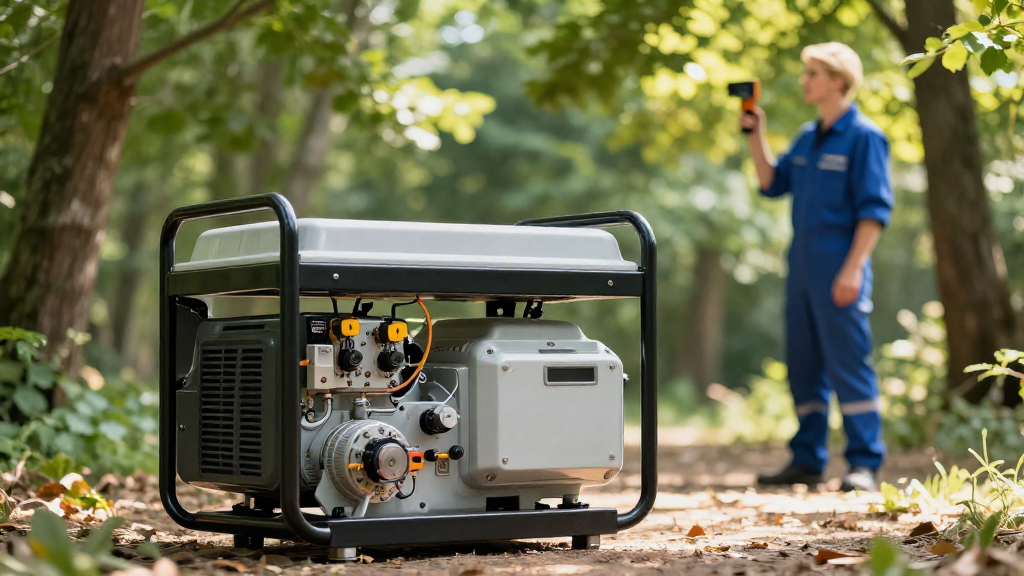
Generators are essential in various sectors, from residential to industrial, providing necessary power during outages.
However, one significant concern is the noise they generate.
To address this issue, numerous generator noise level testing methods are employed.
This article delves into these methods, their significance, and how they work.
Why Is Generator Noise Level Testing Important?
Generator noise can be disturbing for both users and surrounding communities.
Excessive noise can lead to a variety of problems, such as:
- Health issues: Prolonged exposure to high noise levels can cause stress and sleep disturbances.
- Environmental impact: Noise pollution can disrupt local wildlife habitats.
- Legal complications: Many areas have regulations governing acceptable noise levels.
Thus, understanding and applying appropriate generator noise level testing methods is crucial for compliance and community relationships.
What Are the Common Generator Noise Level Testing Methods?
There are several methods used in measuring generator noise levels, and each has its own advantages and contexts for use.
Here are the most common generator noise level testing methods:
1. Direct Measurement Using Sound Level Meters
This is the most straightforward method of measuring generator noise.
A sound level meter (SLM) is used, and it measures the sound pressure level (SPL) in decibels (dB).
Procedure:
– Position the SLM at specified distances (often 7 meters) from the generator.
– Record readings at various angles and distances to assess noise levels comprehensively.
– Repeat measurements in diverse operating conditions for accuracy.
Considerations:
– Environmental conditions should be noted, as wind, humidity, and temperature can affect readings.
2. Octave Band Analysis
This method is more detailed and breaks down sound into individual frequency bands.
Using an octave band analyzer, you can identify which frequencies contribute most to the noise level.
Procedure:
– The analyzer splits sound into octaves for analysis.
– Record data at various bands to evaluate tonal characteristics and identify problematic noise frequencies.
Benefits:
– Helps pinpoint specific sources of noise, enabling targeted mitigation strategies.
3. Integrating Sound Level Meters
Integrating sound level meters provide an average sound level over a specified time period.
This method is beneficial for assessing noise levels in different environments.
Procedure:
– Measure the noise over time intervals to get a more comprehensive understanding of the generator’s impact.
– Useful for evaluating noise during varying operational conditions.
Advantages:
– Provides a clearer picture of noise pollution rather than single point measurements.
4. Field Testing with Data Logging
Field testing using data loggers allows for long-term observations of generator noise levels.
This is particularly useful for assessing compliance with local noise regulations.
Procedure:
– Place sound level meters in various locations around the generator.
– Use data loggers to continuously record noise levels over days or weeks.
Benefits:
– Enables the identification of peak noise levels and patterns, resulting in informed decisions for noise reduction.
5. Comparative Testing
This method involves comparing the noise levels of different generator models or brands under similar conditions.
This direct comparison can help buyers understand which generator produces less noise.
Procedure:
– Use identical settings (load, environment) for various models.
– Measure noise levels using the same testing parameters for accuracy.
Benefits:
– Helps users make educated purchasing decisions based on sound output.
What Instruments Are Necessary for Generator Noise Level Testing?
When it comes to generator noise level testing methods, the right instrumentation plays a vital role.
Here are the essential tools:
- Sound Level Meter (SLM): For basic noise measurement.
- Octave Band Analyzer: For frequency analysis.
- Integrating Sound Level Meter: For time-averaged sound level readings.
- Data Logger: For continuous monitoring over an extended period.
- Wind Shields: To reduce measurement interference caused by wind.
How Are Results Interpreted?
Understanding noise level readings is critical in interpreting the results effectively.
Typically, noise levels are measured in decibels (dB), with common benchmarks being:
- 30-50 dB: Quiet residential area, conversation level.
- 60-70 dB: Moderate sound level, similar to normal office noise.
- 75-90 dB: Loud sounds; can become uncomfortable with prolonged exposure.
- Above 90 dB: Potentially hazardous levels, often requiring hearing protection.
It’s important to compare the findings against local noise ordinances or industry standards to determine compliance.
What Are Best Practices for Conducting Noise Level Tests?
When employing generator noise level testing methods, consider the following best practices:
- Choose the Right Location: Ensure the testing site is representative of typical conditions.
- Control Environmental Factors: Test on calm days to minimize interference from wind and other noise sources.
- Document Everything: Record details like weather conditions, testing time, and equipment used for future reference.
- Repeat Tests: Conduct multiple tests under varying conditions for reliable data.
- Engage Professionals: If needed, hiring professionals can ensure accurate results and compliance with regulations.
Conclusion
Understanding the various generator noise level testing methods is essential for selecting and operating generators that meet community standards and regulations.
With proper measurement and analysis, users can minimize negative noise impacts, resulting in enhanced relations with surrounding communities and improved overall health and satisfaction.
Whether using direct measurement, octave band analysis, or comparative testing, following best practices ensures the results are meaningful and actionable.
By employing these strategies, you can not only make sound decisions regarding generators but also contribute to a quieter, more peaceful environment.