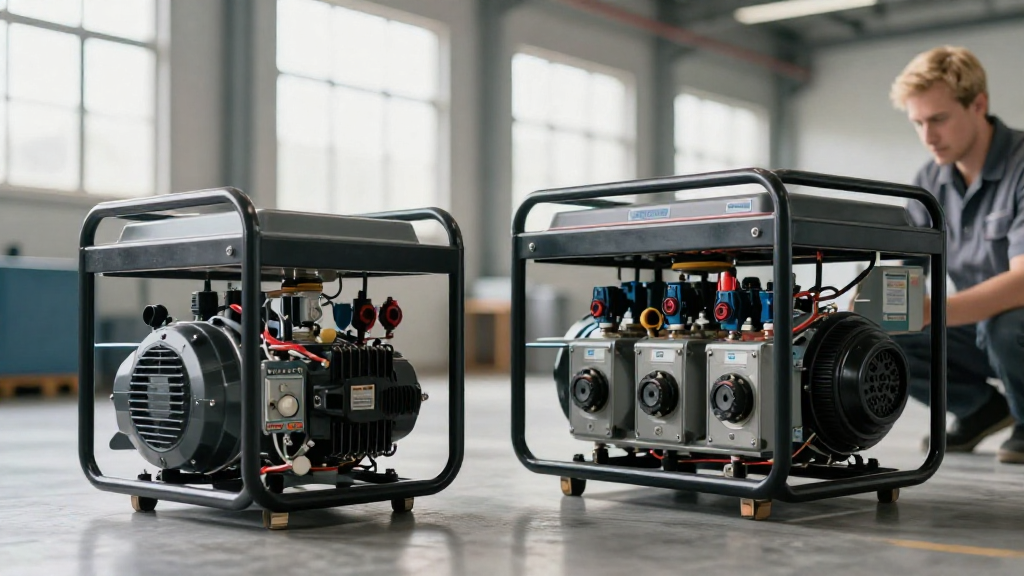
When it comes to choosing the right generator for your needs, understanding the single-phase vs three-phase generator differences is crucial.
What is a Single-Phase Generator?
A single-phase generator is a type of electrical generator that supplies a single alternating current (AC) waveform. Here’s what you should know:
- Operation: It operates using a single phase of electricity.
- Voltage Levels: Usually found in residential settings with voltages of 120V or 240V.
- Applications: Ideal for small loads such as powering home appliances, small machines, lights, and heating systems.
Advantages of Single-Phase Generators:
- Simplicity: They are relatively simple in design and easier to operate.
- Cost-Effective: Generally less expensive than their three-phase counterparts.
- Compact Size: Smaller and lighter, making them easier to handle and transport.
What is a Three-Phase Generator?
In contrast, a three-phase generator produces three alternating currents that are offset by one-third of a cycle. Here are the key points:
- Operation: It operates on three phases of electricity simultaneously.
- Voltage Levels: Commonly operates at 208V, 400V, or higher.
- Applications: Perfect for larger industrial and commercial applications such as factories, heavy machinery, and large buildings.
Advantages of Three-Phase Generators:
- Efficiency: More efficient for large loads.
- Power Delivery: Delivers power more consistently with less fluctuation.
- Higher Power Capacity: Can handle higher electrical loads which is critical in industrial applications.
What Are the Technical Differences Between These Generators?
Understanding the single-phase vs three-phase generator differences involves looking closely at both the technical aspects and operational capabilities:
- Phase Output: Single-phase allows one alternating current waveform, while three-phase generates three waveforms.
- Power Factor Management: Three-phase systems have better power factor management, reducing losses.
- Load Capacity: Three-phase generators can deliver more power efficiently without overheating.
Table: Key Technical Differences
| Feature | Single-Phase Generator | Three-Phase Generator |
|---|---|---|
| Number of Phases | One | Three |
| Voltage Levels | 120V, 240V | 208V, 400V, higher |
| Applications | Residential | Industrial, Commercial |
| Power Capacity | Lower capacity | Higher capacity |
| Operational Complexity | Simple | More complex |
How Do You Know Which One to Choose?
So, how do you decide between a single-phase and a three-phase generator?
Consider your:
- Power Needs: Assess the total wattage required by your appliances or machinery.
- Budget: Single-phase generators are generally more budget-friendly.
- Load Type: If you have heavy machinery and equipment, a three-phase generator is ideal.
- Future Expansion: If you foresee future power needs growing, invest in a three-phase generator.
What Are the Cost Considerations?
When comparing single-phase vs three-phase generator differences, cost plays a significant role.
- Initial Cost: Single-phase generators are typically cheaper upfront.
- Operating Costs: Three-phase generators, while more expensive initially, may save money in operational efficiency over time.
- Maintenance Costs: Consider potential maintenance costs which may be higher for three-phase systems due to their complexity.
Are There Any Limitations?
Both types of generators have limitations, and understanding them is essential when weighing the single-phase vs three-phase generator differences.
Limitations of Single-Phase Generators:
- Power Limitations: Limited in powering heavy machinery and industrial applications.
- Voltage Drop: More susceptible to voltage drops over long distances.
- Less Efficient: For high-load operations, a single-phase generator may not be the most effective choice.
Limitations of Three-Phase Generators:
- Cost: Higher initial investment and potential maintenance costs.
- Complexity: More complicated wiring and installation requirements.
- Size: Generally larger and heavier, which can complicate mobility.
What Are the Best Brands for Each Type?
When it comes to purchasing a generator, brand reputation can be a deciding factor.
Top Single-Phase Generator Brands:
- Honda: Known for reliability and efficiency in portable generators.
- Champion: Offers units that are affordable and easy to operate.
Top Three-Phase Generator Brands:
- Cummins: Renowned for high-quality and powerful generators.
- Caterpillar: A trusted name in industrial-grade generators for heavy-duty applications.
Conclusion: Which Is Right for Your Needs?
In conclusion, understanding the single-phase vs three-phase generator differences is essential for making an informed decision.
- Single-phase generators are great for residential or small-scale applications.
- Three-phase generators are superior for industrial settings where large power demands exist.
Evaluating your power needs, budget, and whether or not you plan for future expansion will guide you in selecting the generator that will serve you best.
Whichever generator you choose, ensure to consider the specific applications to maximize your investment effectively.
Now that you’re equipped with knowledge regarding the single-phase vs three-phase generator differences, you can make a well-informed decision tailored to your specific power needs.